
Truck Rental vs Hiring Movers in Ottawa: An Honest Comparison
Weighing an Ottawa moving truck rental against a full-service crew? Get a free, no-pressure quote and compare it against the true cost of doing it yourself.
Every spring and summer in Ottawa, thousands of people face the same fork in the road: book an Ottawa moving truck rental and do the heavy lifting themselves, or hire a professional crew to handle the whole thing. It is one of the most practical money decisions you will make during a move, and the honest answer is that neither option is automatically “cheaper.” A truck rental looks less expensive on paper, but the real price includes your weekend, your back, your fuel, your insurance risk, and the hours of coordination nobody warns you about. This guide walks through both paths the way a friend in the industry would explain them — no sales pitch, no scare tactics, just a clear-eyed comparison so you can pick the option that genuinely fits your move.
- The two options at a glance
- What an Ottawa truck rental actually involves
- What hiring Ottawa movers actually involves
- The hidden costs people forget to add up
- Ottawa-specific challenges that tip the scales
- When a truck rental is the smart call
- When hiring movers is the smart call
- Long-distance moves change the math
- A simple framework to decide
- Frequently asked questions
The two options at a glance
At the highest level, the choice is a trade between money and effort. A truck rental shifts the labour, driving and risk onto you in exchange for a lower quoted price. Hiring a crew shifts all of that onto trained movers in exchange for a higher quoted price. But those “quoted prices” are misleading, because a self-move has a long tail of costs and time commitments that never appear on the rental counter receipt, and a professional move bundles things — trucks, dollies, blankets, insurance, muscle, and know-how — that you would otherwise assemble yourself.
Here is the useful way to think about it: a truck rental is renting a tool. Hiring professional Ottawa movers is buying a result. With the tool, you are still the one responsible for turning it into a finished move. With the result, someone else owns the outcome — including what happens if a couch does not fit through a Centretown stairwell or a fridge needs to come down three flights in Sandy Hill. Knowing which of those you actually want is the whole decision.
What an Ottawa truck rental actually involves
People picture a truck rental as “grab the keys, load up, drive, done.” In practice, an Ottawa moving truck rental is a multi-step project that starts days before moving day and does not end until the truck is returned clean and on time. Walking through it honestly is the fastest way to understand what you are really signing up for.
Sizing the truck correctly. Rental counters offer everything from cargo vans to 26-foot trucks, and choosing wrong costs you either a second trip or a half-empty truck you are paying to fuel. A one-bedroom Barrhaven apartment, a three-bedroom Kanata townhouse, and a downtown Centretown condo each need a very different vehicle, and most people underestimate. Underestimating means two or three round trips across the city — and if your old and new places are on opposite sides of Ottawa, say Orleans to Nepean, those extra trips can eat an entire extra day.
Gathering the gear. The truck is just a box. To move safely you also need furniture dollies, an appliance hand truck, moving blankets, straps or rope, and ideally a ramp (not every rental includes one that is easy to use). Renting or buying these adds up, and improvising with a borrowed dolly and a few blankets is exactly how floors get gouged and dressers get dinged.
Recruiting help. A self-move is only “free labour” if your friends actually show up. Ottawa moving weekends — especially the end of any month and the notorious rush around July 1 — are when everyone is moving at once, so the friends you were counting on may be moving themselves. If two people bail, you are suddenly carrying a sofa bed down a Glebe staircase with one helper and a lot of regret.
Driving a large vehicle you have never driven. A loaded 26-foot truck handles nothing like your car. It is tall, wide, slow to stop, and unforgiving in tight spots. Ottawa adds its own hazards: low parking-garage clearances downtown, narrow one-way streets in the ByWard Market and Lowertown, the tight turns around older Sandy Hill blocks near the University of Ottawa, and construction detours that seem to move every week. A single misjudged clearance or curbed turn can turn a “cheap” rental into an expensive one.
Returning it on time and clean. Rentals are time-boxed. If loading in Stittsville takes longer than planned and traffic on the Queensway backs up, you can blow past your return window. Late returns, extra mileage, and a not-swept cargo bay all carry charges that quietly erode the savings that made renting attractive in the first place.
What hiring Ottawa movers actually involves
The professional path is shorter to describe because most of it happens without you lifting anything. You book a date, a crew arrives with a properly sized truck already stocked with dollies, blankets and straps, and they load, drive, and unload. A licensed and insured Ottawa moving company brings the three things that are hardest for a DIY move to replicate: trained muscle that knows how to lift without injury, the right equipment already on the truck, and experience reading a tricky staircase or doorway before it becomes a problem.
That experience is the part people undervalue. A seasoned crew has moved sectional couches out of Westboro walk-ups, wrestled king mattresses around the tight landings of Old Ottawa South, and figured out how to get a treadmill down from a Kanata loft without taking off a door. When you hire movers, you are not just renting arms — you are buying the judgment that avoids the damage, the injury, and the “it doesn’t fit” panic. For specialty items like pianos, safes, or antiques, that judgment matters even more, which is why dedicated specialty and heavy-item movers exist as their own service.
The trade-off is real, though: you are paying for all of that, and for smaller or simpler moves the premium over a rental can feel steep. The goal of this guide is not to pretend the professional route is always right — it is to help you see the full picture so the premium either clearly earns its keep for your move, or clearly does not.
Not sure which side of the line your move falls on? Tell us the details and we will give you a straight answer — even if that answer is that a rental makes more sense for you.
The hidden costs people forget to add up
The single biggest mistake in the rental-versus-movers debate is comparing the rental counter price to the mover quote and stopping there. A fair comparison has to include everything a self-move quietly demands. None of these are dollar figures we will invent for you — they are line items you should price out yourself for your specific move — but here is the checklist most people miss:
- Fuel. Large trucks are thirsty, and Ottawa is a spread-out city. A move from Orleans in the east to Kanata in the west is a long haul in a vehicle that drinks fuel, and every extra trip doubles it.
- Mileage charges. Many rentals bill per kilometre on top of the daily rate, so a multi-trip move or a cross-city haul adds up in ways the headline price hides.
- Equipment. Dollies, blankets, straps, a hand truck, and mattress bags either get rented, bought, or improvised. Improvising has its own price in damaged furniture.
- Insurance and liability. With a rental, you are responsible for the truck and everything in it. If your antique dresser tips over on the Queensway or a helper drops the TV, that is on you. Professional movers carry coverage as part of the service.
- Your time. A self-move typically consumes at least one full day, often a full weekend once you count packing, loading, driving, unloading, and returning the truck. If your time has value — and it does — that belongs in the comparison.
- Risk of injury. Sprained backs and crushed fingers are the most expensive “hidden cost” of all. Moving heavy furniture down stairs is genuinely how people get hurt, and there is no receipt that captures a week off work.
When you add these honestly, the gap between a rental and a professional crew narrows far more than the sticker prices suggest — sometimes to the point where the “expensive” option is actually the better value once your weekend and your back are in the equation. For a deeper look at what drives moving costs in this region, our long-distance moving cost breakdown unpacks the factors that matter most.
Ottawa-specific challenges that tip the scales
A truck-rental-versus-movers decision that makes sense in a flat, spacious suburb can flip completely in Ottawa, because our city throws specific obstacles at a move. These are the local realities that make DIY harder than the internet averages suggest.
Winter. If you are moving between November and April, snow and ice change everything. Loading a truck on an icy Nepean driveway, carrying boxes down a slick set of steps in Alta Vista, and driving a tall, empty truck in crosswinds on an exposed stretch of highway are all genuinely risky for an inexperienced driver. Ottawa winters are long, and a surprising number of moves happen in the cold. A professional crew does this every week; a first-timer is learning on the hardest possible day.
Downtown density and parking. Moving into or out of Centretown, the ByWard Market, or a high-rise near the canal means dealing with limited loading zones, permit-only parking, tight elevators, and loading docks that must be booked in advance. Many condo and apartment buildings require you to reserve the service elevator and provide proof of insurance before move-in day — a hurdle that trips up DIY movers constantly. Our guide to apartment and condo moves covers the elevator-and-loading-dock dance in detail.
Bridges and the Gatineau crossing. If your move crosses the river to or from Gatineau, you are navigating bridge traffic and, in a big truck, some tight approaches. It is entirely doable, but it is another layer of unfamiliar driving stress for someone behind the wheel of a rental for the first time.
Older homes and tight access. Ottawa has beautiful older neighbourhoods — the Glebe, Old Ottawa South, Sandy Hill, Hintonburg — full of narrow staircases, tight door frames, steep front steps, and street parking that puts the truck half a block from the door. These are exactly the conditions where experience prevents damage and where an under-equipped self-move goes sideways.
The suburban sprawl. Kanata, Stittsville, Barrhaven and Orleans are spacious and easier to load in, but they are far apart. A cross-city move means a long drive each way, and if you undersized the truck, those extra round trips are brutal on a hot July day.
When a truck rental is the smart call
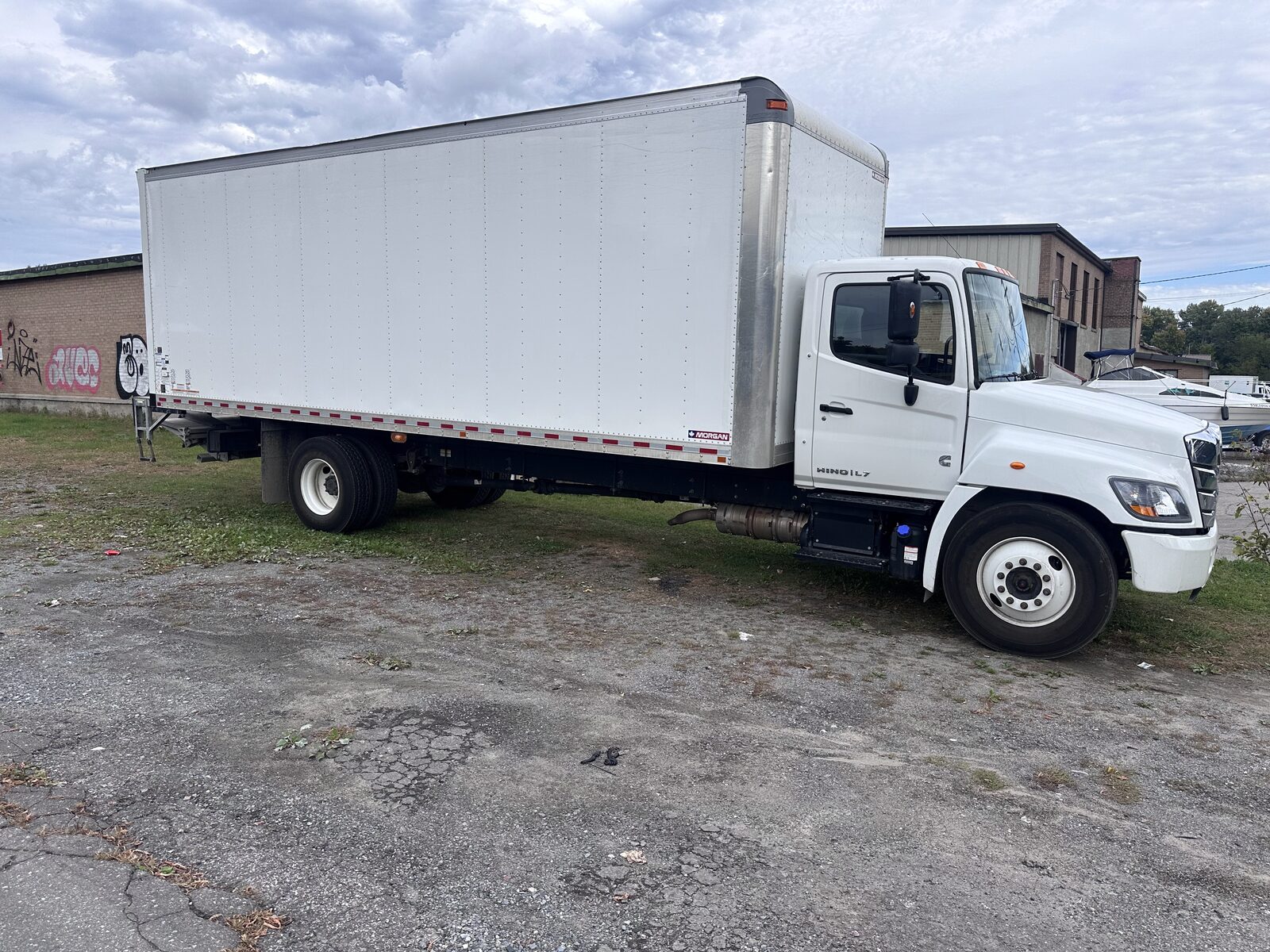
Let us be fair to the DIY route, because for plenty of Ottawa moves it genuinely is the right answer. A truck rental tends to win when several of these are true:
- You are moving a small, light load. A studio or one-bedroom with mostly boxes, a bed frame, and a few pieces of flat-pack furniture is very manageable — especially if nothing is heavy or awkward. For truly small jobs, even a van and a couple of hours of small-move and single-item help can bridge the gap without a full crew.
- You have reliable, able-bodied help. If you genuinely have two or three friends who will show up, are comfortable lifting, and owe you a favour, the labour math improves a lot.
- Both homes have easy access. Ground-floor to ground-floor, driveway parking at both ends, no stairs, no elevator booking — this is the DIY sweet spot.
- You are flexible on timing. If you can move mid-week and mid-month rather than on the July 1 rush, trucks are easier to get, roads are calmer, and you are not fighting all of Ottawa for the same weekend.
- You are comfortable driving a large vehicle. If you have driven trucks before and the route avoids the tightest downtown spots, the driving stress drops significantly.
If most of that describes your move, a rental can be the efficient, economical choice — and there is no shame in it. The point is to go in with eyes open about the gear, the help, and the day it will actually take.
When hiring movers is the smart call
On the other side, there are moves where hiring a crew is not a luxury but simply the sensible decision. Professional movers tend to win when:
- You have heavy, bulky, or valuable items. Sectionals, solid-wood dressers, king mattresses, appliances, pianos, safes, gym equipment, or antiques are where DIY moves cause injuries and damage. This is the strongest single reason to hire.
- Stairs, elevators, or tight access are involved. A third-floor Sandy Hill walk-up, a downtown high-rise with a booked service elevator, or a home with a narrow, twisting staircase all reward experience.
- You are short on time or help. If you cannot spare a full weekend, or your usual helpers are unavailable, a crew compresses a two-day ordeal into a few focused hours.
- You physically should not be lifting. Seniors downsizing, anyone with a back or joint issue, or someone recovering from an injury has every reason to hand the heavy work to professionals.
- You want the outcome guaranteed. When someone else owns the result — including insurance if something goes wrong — the peace of mind is a real part of the value.
For a full picture of what a professional move can include, from packing to specialty handling, our complete list of Ottawa moving services lays out the options so you can match the service to your actual needs rather than paying for more than you require.
Long-distance moves change the math
Everything above assumes a local move within the Ottawa region. The moment your move becomes long-distance — Ottawa to Toronto, Montreal, Kingston, or further — the calculus shifts hard against the DIY rental, for reasons that have nothing to do with sticker price.
With a one-way truck rental, you are now responsible for hundreds of kilometres of highway driving in a fully loaded, unfamiliar vehicle, often on a tight schedule dictated by the drop-off location and time. You handle fatigue, weather, fuel stops, and the pressure of a single long haul with no crew to swap in. Mileage and one-way fees on long routes can be substantial, and if anything goes wrong far from home, you are on your own. For most households, the labour and stress of a self-driven long-distance move outweigh the savings.
A professional long-distance move, by contrast, folds the driving, the equipment, the loading and the coverage into one arrangement, and an experienced out-of-town and interprovincial moving crew plans the route and timing so you are not white-knuckling a rental down Highway 401. If a long-distance move is on your horizon, it is worth reading how the pricing works before you decide — our guide to long-distance moving costs from Ottawa explains the factors that actually move the needle so you can compare apples to apples.
If hiring movers comes out ahead, use our Ottawa moving company comparison to shortlist crews by price model, insurance and reviews.
A simple framework to decide
If you want a quick way to settle the question, run your move through these three filters:
1. How heavy and awkward is the load? Light and boxy leans rental. Heavy, bulky, or valuable leans movers. This one filter resolves most decisions on its own.
2. How hard is the access? Easy, ground-level, driveway parking at both ends leans rental. Stairs, elevators, downtown parking, or tight older homes lean movers.
3. How much are your time, back, and peace of mind worth this month? If you have a free weekend, willing help, and enjoy a project, rental. If your time is scarce, your body is telling you no, or you just want it handled, movers.
Add up which way the three filters point. If they mostly point to a rental, book one with confidence — just size the truck right and line up your help early. If they mostly point to hiring a crew, get a real quote and compare it against the honest, all-in cost of doing it yourself, not just the rental counter price. Either way, you will be making the decision on the full facts instead of a misleading sticker.
Men In Trucks is a licensed and insured Ottawa moving company with a strong local reputation, and we would rather give you a straight comparison than talk you into a service you do not need. If you want that comparison for your specific move, we are one quick quote away.
Get a clear, no-obligation quote for your Ottawa move and see exactly how it stacks up against renting a truck yourself.
Frequently asked questions
Is renting a moving truck always cheaper than hiring movers in Ottawa?
No. A rental usually has a lower sticker price, but the honest total includes fuel, mileage, equipment, insurance risk, your time, and the chance of injury or damage. Once you add those in, the gap narrows a lot — and for heavy loads, tricky access, or long distances, hiring a crew can be the better overall value.
What size moving truck do I need for an Ottawa apartment or house?
It depends on how much you own, not just the number of rooms. A studio or small one-bedroom may fit in a van or the smallest truck, while a three-bedroom home usually needs a large truck to avoid multiple cross-city trips. Most people underestimate, so when in doubt, size up or ask a professional to assess your load.
Do Ottawa condos and apartments have special rules for move-in day?
Often, yes. Many downtown and high-rise buildings require you to book the service elevator or loading dock in advance and to provide proof of moving insurance. Professional movers deal with these requirements routinely, whereas DIY movers are frequently caught off guard by them.
Is a self-move a bad idea in an Ottawa winter?
Not necessarily, but it is harder and riskier. Ice on driveways and steps, snow-covered routes, and driving a tall truck in winter winds all raise the stakes for an inexperienced mover. If you are moving between November and April, weigh the added risk carefully when choosing between a rental and a crew.
Should I ever rent a truck for a long-distance move from Ottawa?
You can, but it is a big commitment. A long-distance self-move means hundreds of kilometres of highway driving in a loaded truck, often on a fixed schedule, with one-way and mileage fees and no crew to help. For most households, a professional long-distance move is worth the difference in cost for the reduced stress and risk.