
Moving from Ottawa to the GTA: What to Know Before Your Long-Distance Move
Moving from Ottawa to the GTA — the Greater Toronto Area — is one of the most common long-distance relocations we handle, and for good reason: careers, family, housing and school all pull people down the Highway 401 corridor every month of the year. Whether you are leaving a condo in Centretown, a family home in Barrhaven or a bungalow in Orléans, a move of 400-plus kilometres is a different animal from a cross-town shift within Ottawa. This guide walks you through timing, the 401 drive, packing for the distance, and settling into both downtown Toronto and the sprawling 905 suburbs, so nothing catches you off guard.
Planning a move from Ottawa to the Greater Toronto Area? Get a clear, no-pressure quote from a licensed and insured Ottawa moving team.
- Why so many Ottawa residents move to the GTA
- The GTA is bigger than Toronto: 416 vs 905
- Building your Ottawa-to-GTA moving timeline
- The Highway 401 corridor: what the drive involves
- Packing and prep for a long-distance move
- Downtown condo vs 905 suburban house
- Where Ottawa movers are headed in the GTA
- Moving to Oshawa and Durham Region
- What affects the cost of your move
- Choosing a licensed and insured long-distance mover
- Moving-day tips for a smooth GTA arrival
- Frequently asked questions
Why so many Ottawa residents move to the GTA
The Ottawa-to-Toronto migration is steady and predictable. The GTA is Canada’s largest job market, and roles in finance, technology, media, logistics and the trades draw professionals who started their careers in Ottawa’s public service and tech scene. Families often move to be closer to relatives in the 905 belt, students transition from uOttawa, Carleton or Algonquin to work placements downtown, and retirees sometimes relocate to be near grandchildren in Markham or Oakville. Housing plays a role in both directions — some people leave Ottawa for a specific GTA neighbourhood, while others use the move as a chance to right-size their home.
Whatever the reason, the logistics rhyme: you are consolidating an entire Ottawa household — from Westboro apartments to Manotick country homes — and sending it down one of the busiest highway corridors in the country. Getting the plan right at the Ottawa end is what makes the Toronto end painless. Our Ottawa movers load every job with the four-hour drive in mind, not as an afterthought.
The GTA is bigger than Toronto: understanding 416 vs 905
One of the most useful things to understand before you move is that “Toronto” and “the GTA” are not the same thing. The City of Toronto — the old 416 area code — is the dense urban core: downtown, midtown, the waterfront, and neighbourhoods like Leslieville, Etobicoke and Scarborough. Surrounding it is the 905 region, a ring of large, fast-growing municipalities that together hold more people than the city itself.
The major 905 destinations Ottawa families move to include:
- Peel Region — Mississauga, Brampton and Caledon, west of the city and close to Pearson Airport.
- York Region — Markham, Vaughan, Richmond Hill, Newmarket and Aurora, directly north.
- Halton Region — Oakville, Burlington and Milton, along the lake toward Hamilton.
- Durham Region — Pickering, Ajax, Whitby and Oshawa, to the east and closest to the Ottawa side of the 401.
Why does this matter for your move? Access is completely different. A downtown Toronto condo means elevator bookings, loading docks, narrow one-way streets and tight parking. A detached home in Whitby or Vaughan usually means a driveway, a garage and room for the truck. Knowing which type of destination you are moving into shapes everything from the size of truck to the time of day we schedule your unload.
Building your Ottawa-to-GTA moving timeline
A long-distance move rewards early planning. Here is a realistic countdown that works for most households leaving Nepean, Kanata, Stittsville or anywhere in the capital:
- Six to eight weeks out: Confirm your closing or possession date, book your mover, and start decluttering room by room. The less you carry 400 kilometres, the smoother and more efficient the move.
- Four weeks out: Gather packing materials or arrange professional packing. Notify your utilities, internet provider, Canada Post (for mail forwarding), and update your address with the province, your bank and your employer.
- Two weeks out: If you are moving into a GTA condo or apartment, reserve the service elevator and loading dock and request the mover’s certificate of insurance for the building. Begin packing rooms you use least.
- Moving week: Pack an essentials box for the first night, defrost the fridge, and finish the last rooms. Confirm arrival windows at both ends.
Because the transit crosses provincial-scale distance rather than a few Ottawa suburbs, tightening your dates early protects you from the summer crunch. July and the end of every month are the busiest windows in both cities, so if your date is flexible, a mid-month weekday move is easier to schedule.

The Highway 401 corridor: what the drive involves
Nearly every Ottawa-to-GTA move travels the same route: south and west out of the city, joining Highway 401 near Prescott or via Highway 416, then a long straight run through Brockville, Kingston, Belleville, Cobourg and Oshawa before the GTA opens up. It is roughly 400 to 450 kilometres depending on your exact GTA destination, and about four to four-and-a-half hours of driving without heavy traffic.
Two things about the 401 matter for your belongings. First, it is a fast, high-volume highway, so everything in the truck needs to be wrapped, padded and secured to ride cleanly for hours — this is where professional loading pays for itself compared with a rushed do-it-yourself trailer. Second, traffic thickens dramatically as you approach the GTA, especially through Durham Region and into the core; an early-morning Ottawa departure often means arriving ahead of the worst congestion. Our long-distance moving team plans departure times around that arrival window rather than leaving it to chance.
Packing and prep for a long-distance move
The single biggest difference between a local Ottawa move and a GTA move is how your belongings are packed. Over a four-hour highway run, boxes shift, and anything loose or poorly wrapped is far more likely to be damaged than on a fifteen-minute cross-town hop within Orléans or Barrhaven.
A few principles make the distance work in your favour:
- Fill boxes completely. Half-empty boxes collapse and full ones crush them. Pad gaps with linens or paper so nothing rattles.
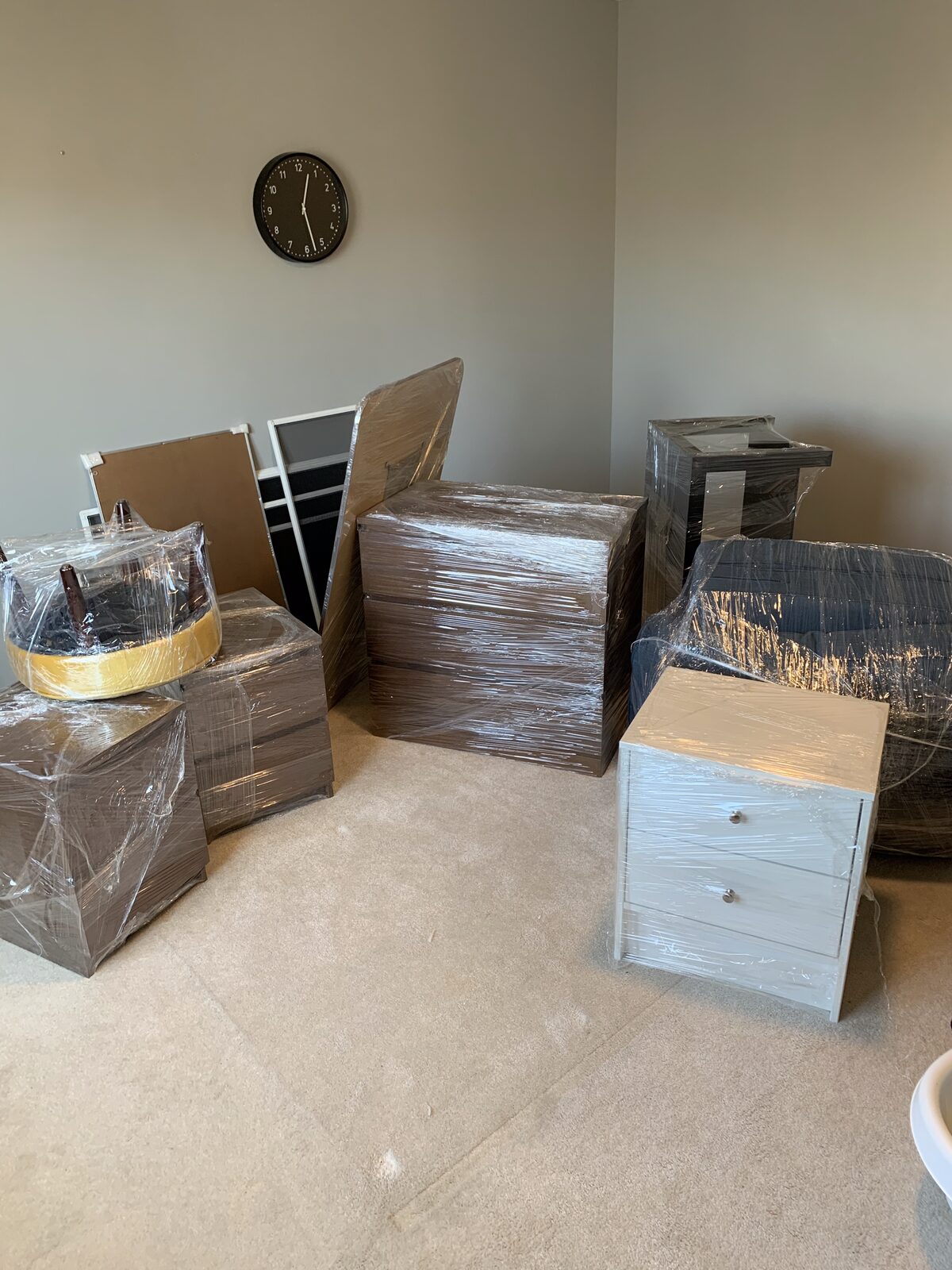
- Wrap furniture, don’t just stack it. Blankets, corner protectors and stretch wrap keep finishes and upholstery safe for the whole trip.
- Label by room and by fragility. Clear labels speed the unload at the GTA end, where elevator time or parking may be limited.
- Keep an essentials bag with you. Medications, chargers, documents, a change of clothes and basic toiletries should travel in your own vehicle, not the truck.
If packing feels overwhelming on top of everything else, our Ottawa moving services include full and partial packing — many customers box their own clothes and books and let the crew handle the kitchen, artwork and anything fragile. For pianos, safes, antiques, gym equipment and other awkward pieces, our specialty moving crew handles the disassembly, crating and secure loading those items need for the 401.
Downtown condo vs 905 suburban house
Where you land in the GTA changes the whole unload. It is worth thinking through before moving day.
Moving into a downtown Toronto condo or apartment means coordinating with the building. Almost every high-rise requires you to book the service elevator and loading dock in a set time window, provide a certificate of insurance, and sometimes leave a refundable deposit. Streets are narrow, parking is scarce, and moves are often restricted to certain hours. This is very similar to moving within one of Ottawa’s own towers, and the same discipline applies — our apartment and condo moving experience in Ottawa’s high-rises translates directly to Toronto’s.
Moving into a 905 suburban house — a detached or semi in Mississauga, Markham, Vaughan, Oakville or Whitby — is usually more forgiving. You typically have a driveway to park the truck, a garage to stage boxes, and no elevator to reserve. The trade-offs are the size of the home (more to move) and, occasionally, multiple floors and a basement. Suburban-to-suburban moves from Kanata, Barrhaven or Stittsville into a 905 house are among the smoothest long-distance jobs precisely because access is easy at both ends.
Where Ottawa movers are headed in the GTA
Ottawa households spread right across the region. A quick orientation to the most common destinations helps you picture the arrival:
- Downtown Toronto & the core — condos and lofts for young professionals; expect building coordination and tight parking.
- Mississauga & Brampton — family homes and townhouses in Peel, close to Pearson and major employers.
- Markham, Richmond Hill & Vaughan — York Region favourites for families and newcomers, with newer subdivisions and good schools.
- Oakville, Burlington & Milton — Halton’s lakeside and growing communities toward Hamilton.
- Pickering, Ajax, Whitby & Oshawa — Durham Region, the closest GTA municipalities to Ottawa and often the first exits off the 401.
No matter which of these you are moving to, the Ottawa side of the job is what we control tightly: a clean, well-organized load from your Westboro, Centretown, Kanata, Gatineau-adjacent or Manotick home that arrives ready to place. If your move to the GTA is part of downsizing later in life, our senior and downsizing movers can help sort, pack and place belongings with extra care.
Moving from Ottawa to Oshawa and Durham Region
Every long-distance move from Ottawa to Oshawa gets one written flat-rate quote, built from your inventory, the distance and your delivery window. We quote Whitby, Ajax and Pickering addresses the same way. When you request your moving quote, tell us three things about the new address:
- Access: house, townhouse or apartment, how many floors, and any stairs or long carry to the door.
- Elevator: whether the building has one and whether it must be reserved for move-in.
- Parking: whether the truck can use a driveway or has to park on the street. The City of Oshawa says streets have a three-hour limit unless signed otherwise. Its parking page also explains the Occasional Use Parking Permit, which covers visitors and special circumstances that prevent homeowners from parking in their driveways.
Setting up at your new Durham address
If you are buying in Durham Region, water is a separate account with the Region, not part of your property taxes. The Region asks you to contact it at least four business days before you need water; see its water billing page. In Oshawa, look up your garbage and green bin days on the City collection schedule page. If your street is in a new development, the City asks you to contact Service Oshawa to confirm that collection has started.
Moving the other way? Our Toronto to Ottawa movers page covers pickups in Durham Region. For a new address in Toronto itself, see Ottawa to Toronto movers.
What affects the cost of your Ottawa-to-GTA move
Every long-distance move is quoted on its own details, but the same handful of factors drive what a move takes. Understanding them helps you plan and, where possible, keep the job efficient:
- Home size and volume. A one-bedroom condo and a four-bedroom house are very different jobs. Decluttering before the move is the most effective way to reduce volume.
- Access at both ends. Stairs, long carries, elevator bookings and parking distance all add time. Easy driveway access at a 905 home is quicker than a downtown high-rise.
- Packing services. Full-service packing saves you effort; packing yourself trims that portion. Many customers do a mix.
- Specialty items. Pianos, safes, appliances and oversized furniture need extra handling.
- Timing. Peak windows — July and month-ends — are busiest in both cities.
A reputable mover will walk you through these on a proper quote rather than a vague number over the phone. When you are ready, our Ottawa long-distance movers can assess your home and give you a clear, itemized estimate.
Choosing a licensed and insured long-distance mover
Interprovincial-scale distance raises the stakes on who you hire. A few things to confirm before you book any company for an Ottawa-to-GTA move:
- Licensing and insurance. Work only with a licensed and insured moving company that can provide proof, and a certificate of insurance if your GTA building requires one.
- A written, detailed quote. Ask for an estimate based on your actual home and belongings, not a flat guess.
- Long-distance experience. Loading for a four-hour highway run is a specific skill. Ask how they secure a load for the 401.
- Clear communication. You want a single point of contact and realistic arrival windows at both ends.
- A strong local reputation. A company with deep roots in the Ottawa community and a solid local Google reputation has a track record you can check.
Men In Trucks is a licensed and insured Ottawa moving company, and our aim on every long-distance job is to be the most careful, reliable movers you have worked with — from the first box in Kanata to the last piece placed in your GTA home. If you are also weighing a move to other cities, our route guides to Toronto and beyond cover the specifics of each destination.
Moving-day tips for a smooth GTA arrival
By the time the truck is loaded in Ottawa, most of the hard planning is behind you. A few final habits make the GTA end go smoothly:
- Be reachable during transit. Keep your phone charged so the crew can confirm the arrival window as they approach the GTA.
- Have your building paperwork ready. For condos, have the elevator booking and any dock or insurance documents on hand for the property manager.
- Direct the unload. Tell the crew which box goes to which room using your labels — it saves a second round of moving later.
- Check the essentials first. Beds, a few kitchen basics and the bathroom are what you want set up before nightfall on day one.
Done well, a move from Ottawa to the GTA is simply a long day that ends with you standing in a new home, not a source of stress. The distance is real, but with an early plan, careful packing and a team that loads for the drive, it is entirely manageable.
Ready to plan your move from Ottawa to Toronto, Mississauga, Markham or anywhere in the GTA? Reach out for a free, no-obligation quote from a licensed and insured Ottawa team.
Frequently asked questions about moving from Ottawa to the GTA
How long does a move from Ottawa to the GTA take?
The drive from Ottawa to the Greater Toronto Area runs roughly 400 to 450 kilometres along Highway 401, or about four to four-and-a-half hours without traffic. A full household move is usually completed as a one-day transit, with loading in Ottawa and delivery in the GTA scheduled around the truck’s arrival window. Larger homes or moves into downtown condos with elevator bookings may be planned across two days.
Do I need to book elevator time for a GTA condo move?
Yes. Most Toronto and 905 condo and apartment buildings require you to reserve the service elevator and loading dock in advance, often with a refundable deposit and a certificate of insurance from your mover. As a licensed and insured company, we can provide the paperwork your building’s property manager requests. Book the elevator as soon as your closing or possession date is confirmed.
Can you move us from a Kanata or Barrhaven home to a suburban GTA house?
Absolutely. Suburban-to-suburban moves — for example a detached home in Kanata, Barrhaven or Orléans to a house in Mississauga, Markham, Vaughan or Oakville — are among the most common Ottawa-to-GTA relocations we handle. Driveway access and parking are usually easier than downtown, which can make loading and unloading more straightforward.
What affects the cost of an Ottawa-to-GTA move?
The main factors are the size of your home and the volume of belongings, the distance and access at both ends (stairs, elevators, long carries, parking), how much packing you want the crew to handle, and any specialty items such as a piano, safe or large appliances. Booking early and decluttering before the move are the two most effective ways to keep a long-distance move efficient.
Should I pack myself or have the movers pack?
Both work. Many customers pack their own boxes to save time on moving day and have our team handle furniture, disassembly, wrapping and the heavy lifting. For fragile, valuable or awkward items, professional packing protects them for the long 401 drive. We can provide full-service packing, partial packing of just the fragile rooms, or supply materials for a do-it-yourself pack.