
Are Moving Expenses Tax Deductible in Canada? What Ottawa Movers Get Asked
Planning a move that might qualify? Get a clear, written quote you can file away with your records — the kind of documentation that makes tax time far less painful.
Every spring, one question lands in our inbox more than almost any other: are moving expenses tax deductible in Canada? The short answer is that they sometimes are — but only when your move meets a specific set of conditions the Canada Revenue Agency has laid out, and only for certain categories of cost. As a licensed and insured Ottawa moving company, we are not accountants and this is not tax advice. What we can do is explain the questions we get asked most, point you to the CRA’s own rules, and — most importantly — make sure the paperwork we hand you is the kind your accountant can actually use.
This guide walks through how the deduction generally works, which Ottawa-area situations tend to come up (federal public service transfers, Kanata tech relocations, cross-river moves to Gatineau, students heading to uOttawa or Carleton), and exactly what to keep from your movers. Before you file anything, confirm the current rules on the CRA’s moving expenses page at canada.ca and talk to a qualified tax professional about your own circumstances.

What this guide covers
- The quick answer: when a move may qualify
- The CRA distance test, explained plainly
- Who typically qualifies — workers, business owners, students
- Cost categories the CRA generally recognizes
- What generally does not count
- Ottawa situations we get asked about
- Crossing the river: Ottawa to Gatineau
- Long-distance moves out of Ottawa
- The paperwork to keep from your moving company
- How to ask your mover for the right documents
- Timing your move for a clean paper trail
- Common mistakes we see
- Frequently asked questions
The quick answer: when a move may qualify
Canada does allow a moving expenses deduction, but it is narrower than most people assume. It is not a general “I moved house, so I get a break” credit. Broadly speaking, the CRA expects three things to line up at once.
First, you must be moving for a reason the CRA recognizes — starting a job, being transferred by an employer, starting or running a business at a new location, or attending a post-secondary institution full time. Moving because you wanted a bigger backyard in Barrhaven, on its own, is not one of those reasons.
Second, your new home has to be meaningfully closer to that new work or school location. The CRA measures this with a distance test, which we unpack in the next section. This is the condition that trips up the largest number of Ottawa movers, because so many local moves — Centretown to Westboro, Nepean to Stittsville — simply do not move you closer to anything by enough.
Third, you generally can only deduct against income earned at the new location. If you move in late in the year and earn very little at the new job before December 31, the deduction may be limited for that tax year, though unused amounts can often be carried forward. Students are typically limited to deducting against the taxable portion of scholarships, fellowships, bursaries, or research grants.
If all three line up, a real set of costs — including what you paid a moving company — may come into play. If any one of them does not, the deduction typically does not apply no matter how expensive or stressful the move was.
The CRA distance test, explained plainly
The distance test is the single rule worth understanding before you do anything else, because it decides the question for most people in about two minutes.
The test is not about how far you moved. It is about how much closer to your new workplace or school your new home is compared to your old home. The commonly cited threshold is 40 kilometres: your new home must be at least 40 kilometres closer to the new work or school location than your old home was. Distances are measured by the shortest normal route open to the public, not as the crow flies — which matters a great deal in a region shaped by two rivers and a limited number of bridges.
Work through it with a concrete Ottawa example. Suppose you live in Orléans and take a new job in Kanata. That is a long, unpleasant commute across the whole city, and moving from Orléans to Kanata genuinely shortens it. Whether it shortens it by the full threshold depends on your exact addresses — the east-to-west span of the city means some of these moves clear the bar and some land just short. It is worth actually measuring rather than assuming.
Now a counter-example. You move from a Centretown apartment to a house in Alta Vista while keeping the same downtown job. The move might improve your life enormously, but it barely changes your distance to work. That move almost certainly fails the test.
A third pattern we see constantly: someone takes a position in Toronto, Montreal, or Kingston and relocates out of Ottawa entirely. Those moves clear the distance test comfortably. If that is your situation, our long-haul relocation team handles these routes regularly, and the documentation side is straightforward.
One nuance people miss: the test compares your old home and new home against the new work location. It does not compare your old workplace to your new workplace. Getting that backwards leads people to the wrong conclusion in both directions.
Who typically qualifies — workers, business owners, students
The CRA recognises a handful of distinct situations, and the details differ enough that it is worth finding yourself in the right category.
Employees starting or transferring to a job
This is the most common case in Ottawa, and it covers more than just changing employers. An internal transfer counts. So does a promotion that relocates you. What matters is that you are moving to be closer to a place where you will be employed.
A wrinkle specific to this city: many employers, including large public-sector and technology employers, offer relocation assistance. If your employer reimburses you for part of the move, you generally cannot also deduct the reimbursed portion — you would be claiming a cost you did not ultimately bear. If your employer reimburses some but not all of it, the unreimbursed remainder is usually the part in play. Keep the reimbursement paperwork alongside your moving invoice so your accountant can see both sides clearly.
Self-employed people and business owners
If you run a business and relocate it, or relocate yourself to run it from a new place, the same broad framework applies: recognised reason, distance test, and a limit tied to income earned at the new location. Ottawa has a large consulting and contracting community serving government, and we move a fair number of home offices. The bookkeeping here tends to be more involved, because business and personal moving costs can blur together — a good reason to separate the two on your paperwork from day one.
Full-time post-secondary students
Students moving to attend a post-secondary institution full time can qualify, but the deduction is generally limited to the taxable portion of scholarships, fellowships, bursaries, certain prizes, and research grants — not to part-time job income. In practice that means many students find the deduction less useful than they hoped, while graduate students on research funding often find it genuinely relevant.
This comes up every August and September when students arrive for uOttawa, Carleton, or Algonquin. It also comes up in reverse, when a student who moved to Ottawa for school moves away again after graduating to start a job — that second move is frequently the one that actually qualifies, because it is a move for employment.
Cost categories the CRA generally recognizes
Assuming your move qualifies, the CRA groups eligible costs into several buckets. We are describing categories here, not amounts — what you can claim depends entirely on what you actually paid and can document.
- Transportation and storage of household effects. This is the core of it: professional movers, packing, hauling, in-transit insurance, and temporary storage. If you hire a moving company, this is where that invoice lives.
- Travel costs to get to the new home. Vehicle expenses, meals, and accommodation for you and your household on the way. The CRA offers a simplified method (flat per-kilometre and per-meal rates it publishes and updates) and a detailed method (actual receipts). You pick one and stay consistent.
- Temporary living expenses near the old or new home. Meals and accommodation for a capped number of days — the cap has long been set at 15 days, but confirm the current figure before you file.
- Cost of cancelling a lease on your old residence, subject to conditions.
- Incidental costs tied to the move: changing your address on legal documents, replacing a driver’s licence and vehicle permits, and utility connection and disconnection charges.
- Costs of maintaining a vacant old home while reasonable efforts are made to sell it, subject to limits and conditions.
- Costs of selling the old home — such as real estate commission and legal fees — and, in defined circumstances, legal fees and land transfer tax on the new home.
Two practical notes. The simplified method for meals and vehicle travel is popular because it means fewer receipts, but the rates change year to year, so always pull the current ones from the CRA rather than reusing a figure a friend quoted you. And “storage” being eligible is genuinely useful for the many Ottawa moves that involve a gap between closing dates — a common enough situation that we build storage into quotes routinely.
What generally does not count
The exclusions surprise people more than the inclusions, so it is worth being blunt about them.
- House-hunting trips before you move. Flying or driving to the new city to look at places is generally not eligible, even though it is unquestionably a moving cost in ordinary language.
- Work done to make your old home more saleable. Staging, painting, repairs, landscaping — not eligible.
- Any loss on the sale of your old home. If the market moved against you, that is not a moving expense.
- Expenses reimbursed by your employer that you are not including in income.
- Job-hunting costs in the new city.
- Mail forwarding and similar conveniences.
- The value of items you could not move and had to leave behind or replace.
- New furniture or appliances for the new home. Buying a new sofa because the old one did not fit is not part of the move.
That last one matters in a city with a lot of older housing stock. Century homes in the Glebe and New Edinburgh, and walk-up apartments in Sandy Hill, routinely defeat furniture that fit fine somewhere else. The replacement cost is on you; the cost of the crew who tried is the part that may be claimable.
Ottawa situations we get asked about
Ottawa’s employment mix produces a few recurring patterns. Here is how they tend to look in practice.
Federal public service transfers
Ottawa is a transfer city. People arrive from across the country for a posting and leave again for the next one. Where a department administers a formal relocation program, much of the cost is often handled directly or reimbursed — which, again, generally removes it from your own deduction. The portion you carry yourself is the part worth documenting. If you are arriving rather than leaving, our guide to settling into Ottawa covers the neighbourhood and logistics side of that transition.
Kanata technology relocations
The Kanata North corridor draws people from Toronto, Waterloo, Montreal, and further. A move from another province to a Kanata job clears the distance test without any real argument. The question in these cases is usually not whether the move qualifies but how much of it the employer covered.
East-end to west-end job changes
This is the genuinely borderline category, and the one where measuring matters. Orléans to Kanata, Barrhaven to a new posting near the airport or in Gloucester, Stittsville to somewhere in the east — some of these clear 40 kilometres of improvement and some do not. Measure the actual driving routes for old home to new workplace and new home to new workplace before you assume either way.
Downsizing retirees
Retirement moves generally do not qualify, because there is no new employment or full-time schooling at the destination. That is worth saying plainly, because it comes up often. The move may still be absolutely the right decision — it simply is not a tax event. Our downsizing and senior moving service is built around that reality, focused on pacing, sorting, and care rather than paperwork.
Crossing the river: Ottawa to Gatineau and back
Moving across the Ottawa River is not just a change of address — it is a change of tax jurisdiction, and it introduces a second filing to think about.
Quebec administers its own personal income tax system alongside the federal one. A Quebec resident files both a federal return and a provincial return with Revenu Québec, and Quebec has its own moving expenses form and its own rules, which broadly parallel the federal ones but are not identical. If you move from Ottawa to Gatineau, Aylmer, or Hull and you meet the conditions, you may be looking at claims on both returns rather than one.
Your province of residence for a given tax year is generally determined by where you lived on December 31. That single date can decide which system you are filing into, which is one of several reasons a December cross-river move deserves a conversation with an accountant before you book the truck rather than after.
The practical logistics of a cross-river move are worth a word too. Bridge access, differing municipal parking-permit processes, and bilingual paperwork all add small frictions. Our crews cross the river constantly and carry documentation in both languages, so the moving side stays simple even when the filing side does not.
Long-distance moves out of Ottawa
Long-distance moves are where the deduction is most likely to actually apply, simply because they clear the distance test so easily. They are also where the sums involved are largest, which makes the documentation worth getting right the first time.
The routes we run most often out of Ottawa are the 401 corridor west toward Kingston and Toronto, the 417 east to Montreal, and the longer national hauls to the Prairies and the coasts. Each one has its own rhythm. A move to Toronto can often be completed in a single long day, which keeps travel and temporary-accommodation costs minimal. A move to Vancouver or Halifax involves multiple days on the road, which means travel meals and accommodation genuinely become part of the picture — and part of what you may be documenting.
If you are budgeting the move itself before you get to any tax question, our breakdown of what drives long-distance moving costs explains which variables actually move the number: volume, distance, access at both ends, timing, and whether you need storage in between.
One thing worth flagging for anyone comparing options: a consolidated or shared-load move, where your shipment travels with others, usually costs less but arrives within a window rather than on a fixed day. That window can push you into more days of temporary accommodation. It is not a reason to avoid consolidation — it is a reason to plan around it, and to know that those extra nights may fall within a capped, potentially claimable category if your move qualifies.
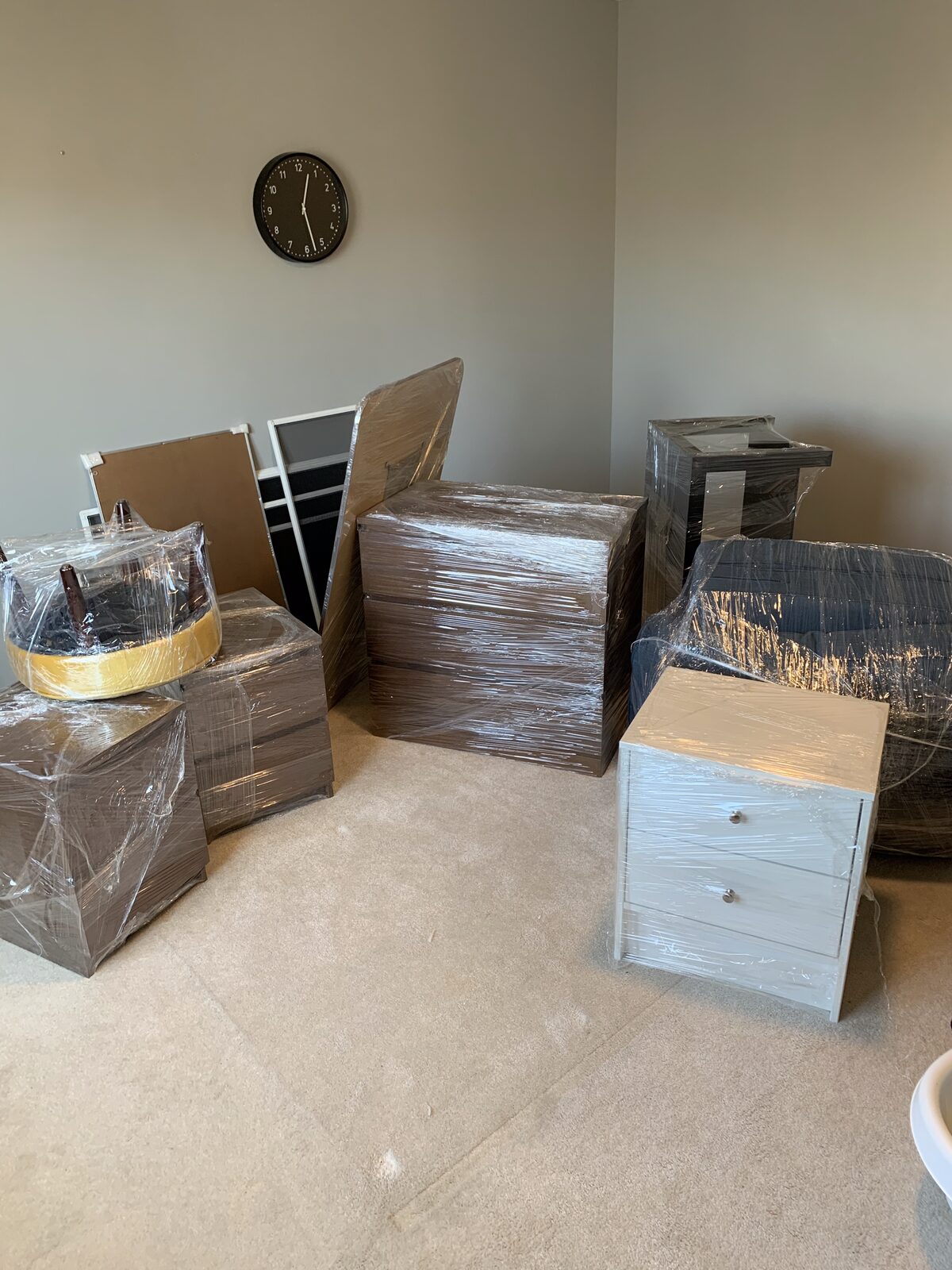
The paperwork to keep from your moving company
Here is the part where a moving company can genuinely help, and where we see the most avoidable pain. Accountants do not need stories; they need documents. Whatever else you do, keep the following.
- The written quote or estimate. It establishes what was agreed and when, and it shows the scope of the job.
- The final invoice, itemised. A single lump-sum line is much less useful than a breakdown separating labour, transportation, materials, storage, and any additional services. Itemisation lets your accountant assign each piece to the right category — and lets them exclude anything that does not belong.
- Proof of payment. A receipt, card statement, or transfer confirmation matching the invoice.
- The bill of lading or job sheet showing origin address, destination address, and the date of the move. This is what ties the expense to the specific relocation and the specific tax year.
- Storage agreements and dates if your goods were held between homes.
- Any insurance or valuation documentation issued for the shipment.
Keep travel documentation from the same trip in the same folder: fuel receipts, hotel folios, and meal receipts if you are using the detailed method. If you are using the simplified method, you still want a clear record of the distance driven and the dates.
Store all of it digitally. Thermal-paper receipts fade, sometimes within months, and a faded receipt is functionally a lost one. Photograph everything the week of the move and put it in one folder named for the tax year. It takes fifteen minutes and it removes an entire category of future problem.
How to ask your mover for the right documents
Most reputable movers will produce proper documentation without being asked, but it never hurts to be explicit — especially about itemisation, which is the detail most often missing.
When booking, say plainly: “I may be claiming this move on my taxes. Can you provide an itemised invoice showing origin and destination addresses, the move date, and separate lines for labour, transport, materials, and storage?” That single sentence prevents nearly every documentation problem we have ever seen.
It is also a quiet quality signal. A licensed and insured company with real systems will say yes without hesitation. A cash-only operation working without written paperwork will not be able to give you what the CRA expects — which is a reason to be cautious about that operator generally, well beyond the tax question. Our Ottawa moving team issues written quotes and itemised invoices on every job as a matter of course, because it is simply how a professional move should run.
If you have already moved and your paperwork is thin, ask anyway. A reputable company can usually reissue an invoice or provide a copy of the job record from its files.
Timing your move for a clean paper trail
Timing affects the tax picture in ways that are easy to overlook when you are focused on closing dates and possession.
Because the deduction is generally limited to income earned at the new location in that tax year, a move in November or December may leave you with more eligible expense than income to apply it against. Unused amounts can often be carried forward to the following year, so this is usually a deferral rather than a loss — but it is worth knowing before you file and find the number smaller than expected.
The date of the move also anchors the expense to a tax year, which is why the bill of lading matters. Where a move genuinely spans a year boundary — goods loaded in late December, delivered in January, with storage in between — make sure your documents show both dates clearly rather than a single ambiguous one.
There is a practical Ottawa dimension here as well. This city has an unusually concentrated moving season: leases and closings cluster heavily around the start of July, and demand in late June and early July is intense. Booking early gets you a better crew and a calmer day. It also gets you a written quote well in advance, which is exactly the document you will want later. Moving in the shoulder seasons — spring or autumn — tends to mean more availability and more scheduling flexibility.
Winter moves deserve a mention too. An Ottawa move in January or February brings salt, slush, ice, and short daylight, all of which affect how a crew protects your floors and your goods. None of that changes the tax treatment, but it does change what a competent move looks like on the ground. Our full range of Ottawa moving services covers seasonal protection as standard rather than as an upsell.
Common mistakes we see
These are the recurring errors we hear about after the fact — the ones worth heading off.
Assuming any move qualifies. Far and away the most common. A move within Ottawa that does not shorten your commute to a new job by enough almost certainly does not qualify, however far you physically hauled your belongings.
Measuring the distance test backwards. The comparison is old home versus new home, both measured to the new workplace. Not old workplace versus new workplace.
Double-counting employer reimbursements. If someone else paid for it and you are not including that payment in income, it is generally not yours to deduct.
Accepting a lump-sum invoice. One line reading “moving services” makes an accountant’s job harder and can cost you the ability to separate what is claimable from what is not. Ask for itemisation up front.
Losing the receipts. Faded thermal paper and a shoebox in a garage that is now in another city. Photograph everything the week of the move.
Forgetting the second return after a cross-river move. Ottawa to Gatineau means Quebec’s system enters the picture, with its own form and its own rules.
Relying on a friend’s numbers. The CRA updates its simplified-method rates and various limits. Rates from a few years ago are not the rates that apply to your filing year.
Moving out of Ottawa this year? Get a written, itemised quote from a licensed and insured local team — clear enough to plan around, and detailed enough to file.
Frequently asked questions
Are moving expenses tax deductible in Canada for a regular house move?
Generally no, not on their own. The CRA allows a moving expenses deduction only when you move to start a job, run a business, or attend a post-secondary institution full time, and your new home is at least 40 kilometres closer to that new work or school location than your old home was. A move made purely for lifestyle or space reasons does not qualify. Confirm the current rules on canada.ca and speak with a tax professional about your situation.
Can I deduct what I paid a moving company?
If your move meets the CRA’s conditions, the transportation and storage of your household effects — which is what a moving company invoice covers — falls within the recognised categories. Keep the written quote, the itemised final invoice, proof of payment, and the bill of lading showing both addresses and the move date.
Does a move from Ottawa to Gatineau change anything?
Yes. Quebec administers its own income tax system, so a Quebec resident files both a federal return and a provincial return with Revenu Québec, each with its own moving expense rules and forms. Your province of residence for a tax year is generally based on where you lived on December 31, so the timing of a cross-river move matters.
My employer paid for part of my relocation. Can I still claim something?
Generally you cannot deduct amounts your employer reimbursed and that you are not including in income. The portion you paid yourself and were not reimbursed for is usually the part in play. Keep both the reimbursement documentation and your own invoices so the two can be reconciled.
I am a student moving to Ottawa for university. Does the deduction help me?
Students moving to attend a post-secondary institution full time can qualify, but the deduction is generally limited to the taxable portion of scholarships, fellowships, bursaries, certain prizes, and research grants rather than employment income. That makes it more relevant for graduate students on research funding than for undergraduates working part-time jobs.
What if I moved in December and barely earned anything at the new job?
The deduction is generally limited to income earned at the new location in that tax year. If eligible expenses exceed that income, the unused portion can often be carried forward and applied in the following year, so it is typically a timing issue rather than a lost claim.
Which moving costs are definitely not eligible?
House-hunting trips taken before the move, work done to make your old home more saleable, any loss on the sale of your old home, job-hunting costs in the new city, mail forwarding, and new furniture or appliances for the new home are all generally excluded.
What documents should I ask my mover for?
Ask for an itemised invoice that separates labour, transportation, materials, and storage, and that shows the origin address, destination address, and date of the move. Add the original written quote, proof of payment, and any storage agreement. Photograph everything the week of the move, because thermal receipts fade.
This article is general information only and is not tax advice. Rules, rates, and limits change. Confirm the current requirements on the CRA’s moving expenses pages at canada.ca, and consult a qualified tax professional about your own circumstances.